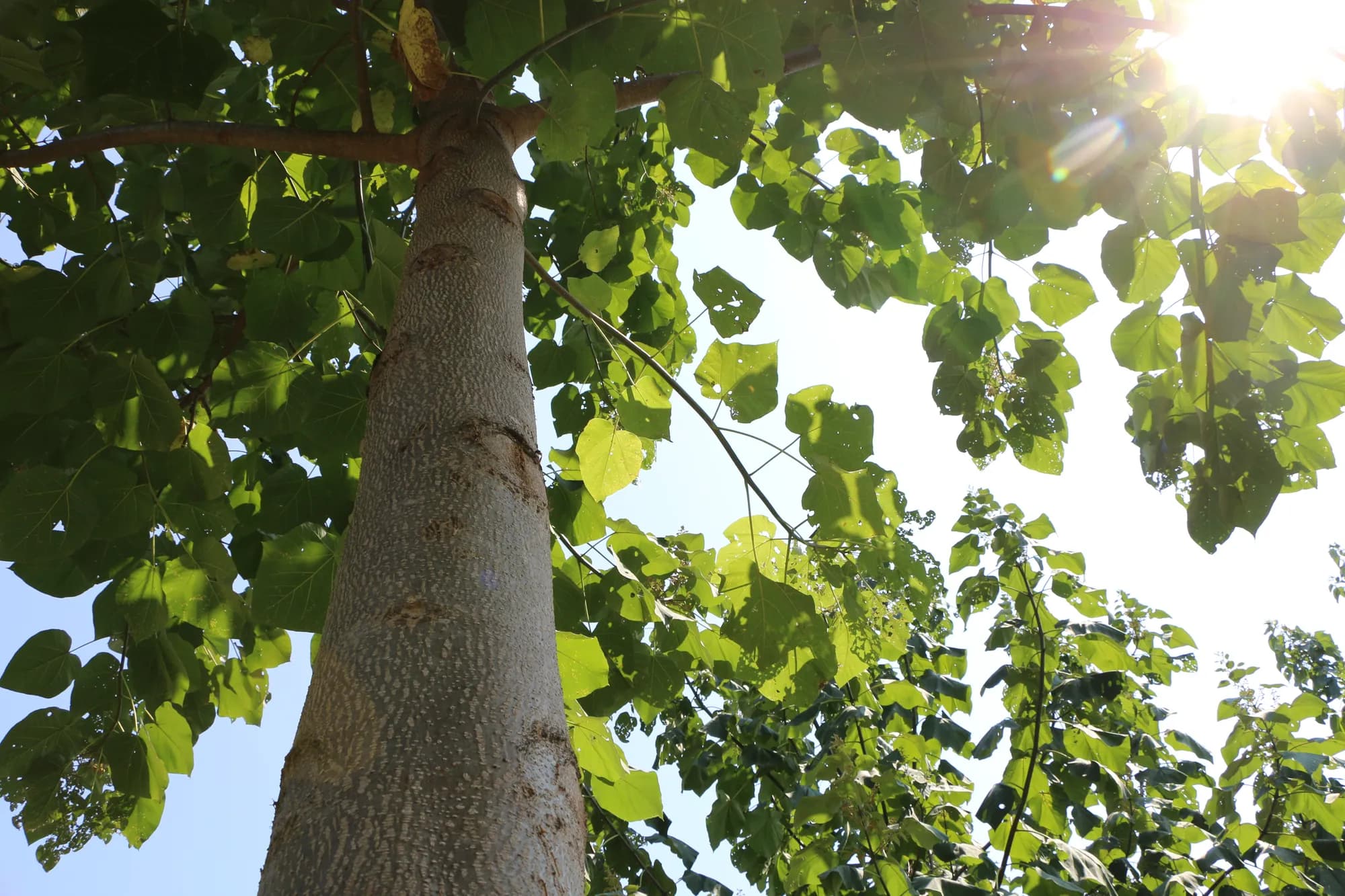
Carbon, drawn down
Independent models from Ostrom Climate and USDA COMET put paulownia at up to 15 metric tons of CO2 per acre a year, about ten times as much as a pine.
See our carbon impact
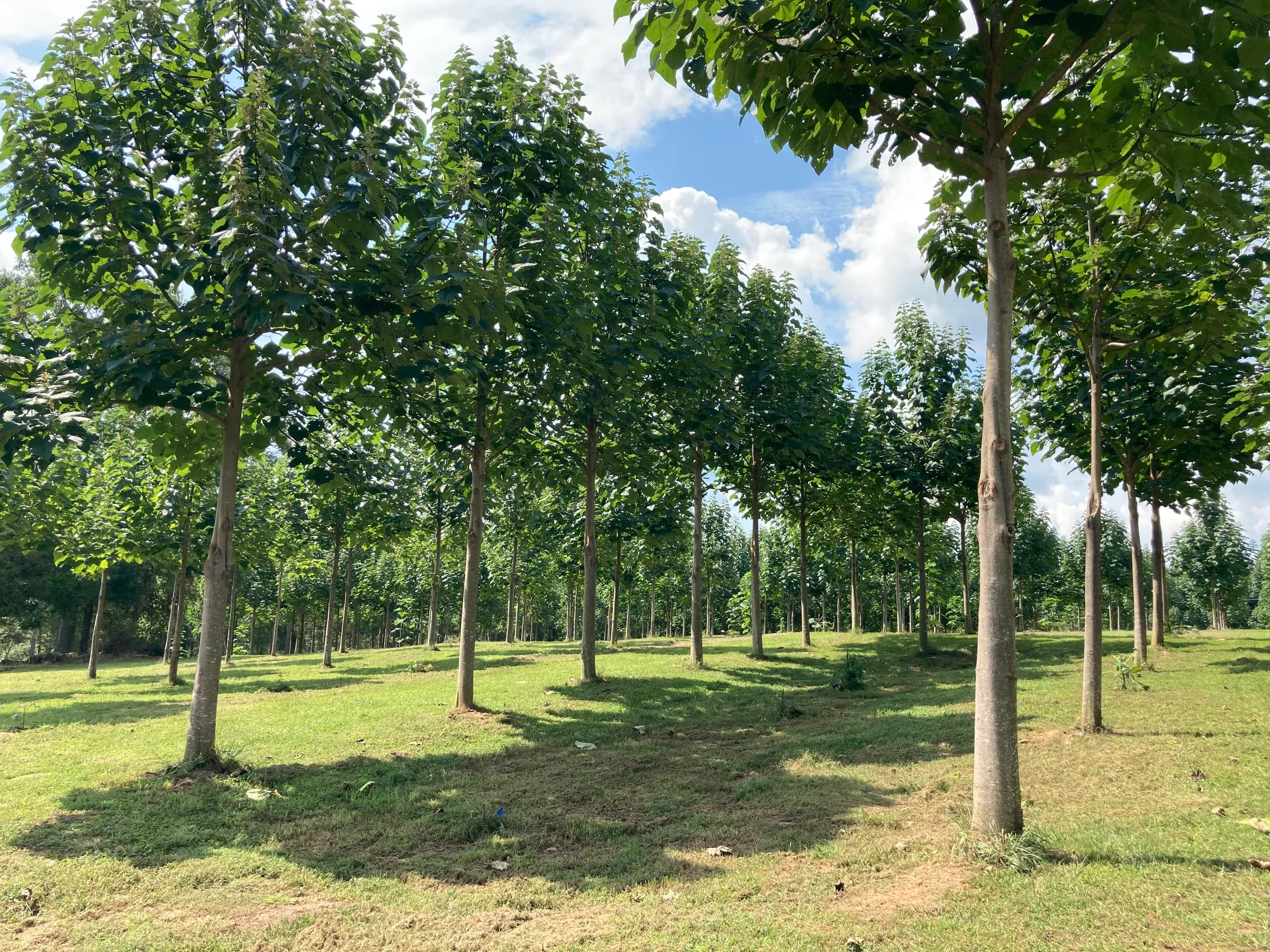
Paulownia is one of the fastest-growing trees on the planet, pulling down carbon and rebuilding the soil as it grows, then regrowing from the stump after each harvest.
Across Asia, paulownia has been treasured for more than two thousand years. In Japan, families planted one at the birth of a daughter and, at her wedding, made its timber into a chest for her most precious belongings, the wood valued for being light and for shrugging off fire, moisture, and insects. Its blossom became a crest of honor still used by the Japanese government today. Korean families kept the same custom, and Chinese craftsmen prized the tree's resonant wood for the finest stringed instruments. Until recently, nearly all of that supply came from overseas, so American buyers had to import it. We've built the U.S. supply chain from the ground up.
A young paulownia can put on ten to twenty feet in its first year, then another five to ten feet each year after that, with leaves the size of serving platters. Ostrom Climate has verified those growth rates in the field.
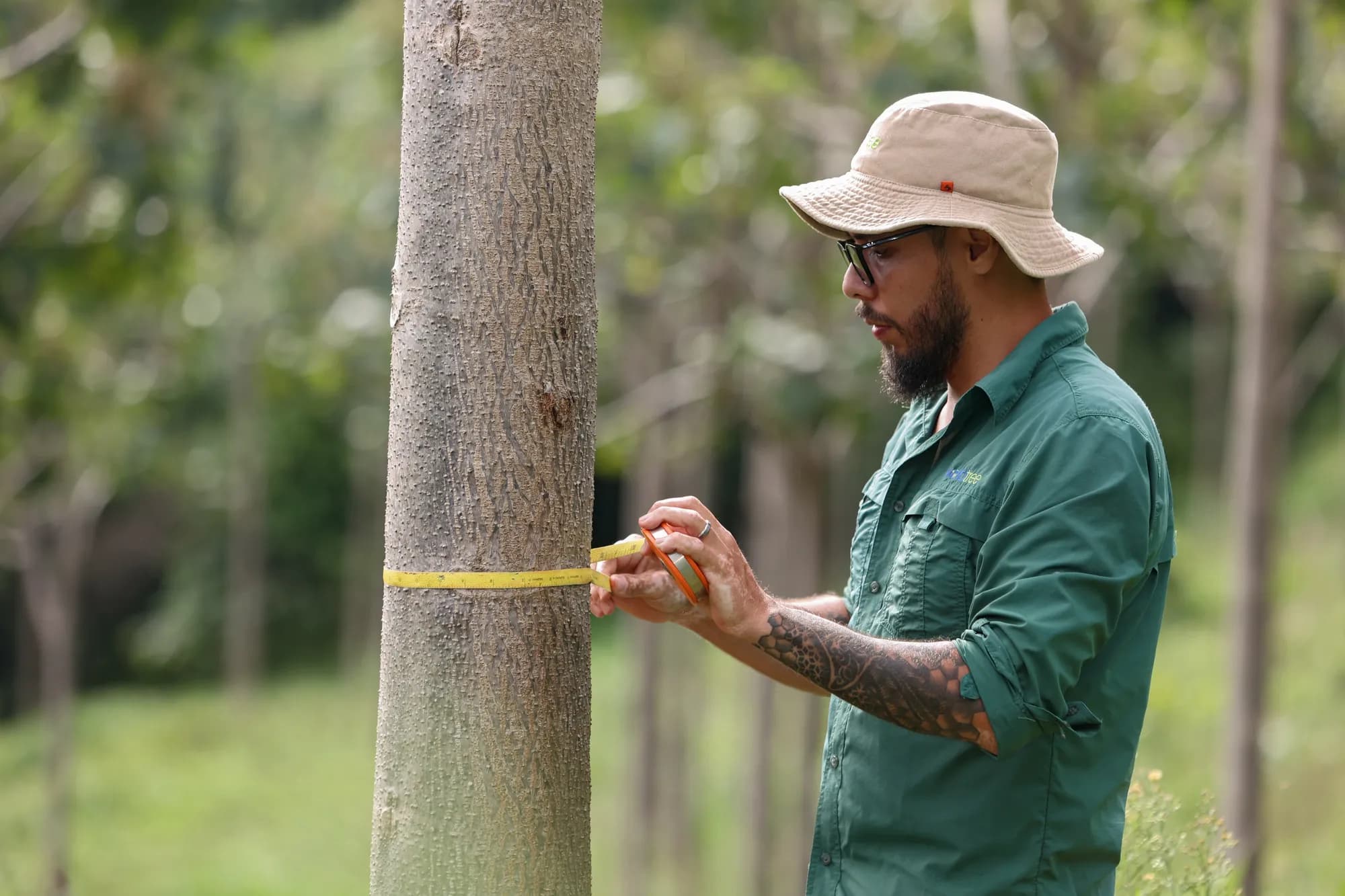
A paulownia earns its place in the ground long before it is ever milled. For the eight to twelve years it takes to reach harvest, the tree is quietly working the land it grows on, and the farm is better for it. Then it grows back from the stump and does it all over again.
Independent models from Ostrom Climate and USDA COMET put paulownia at up to 15 metric tons of CO2 per acre a year, about ten times as much as a pine.
See our carbon impact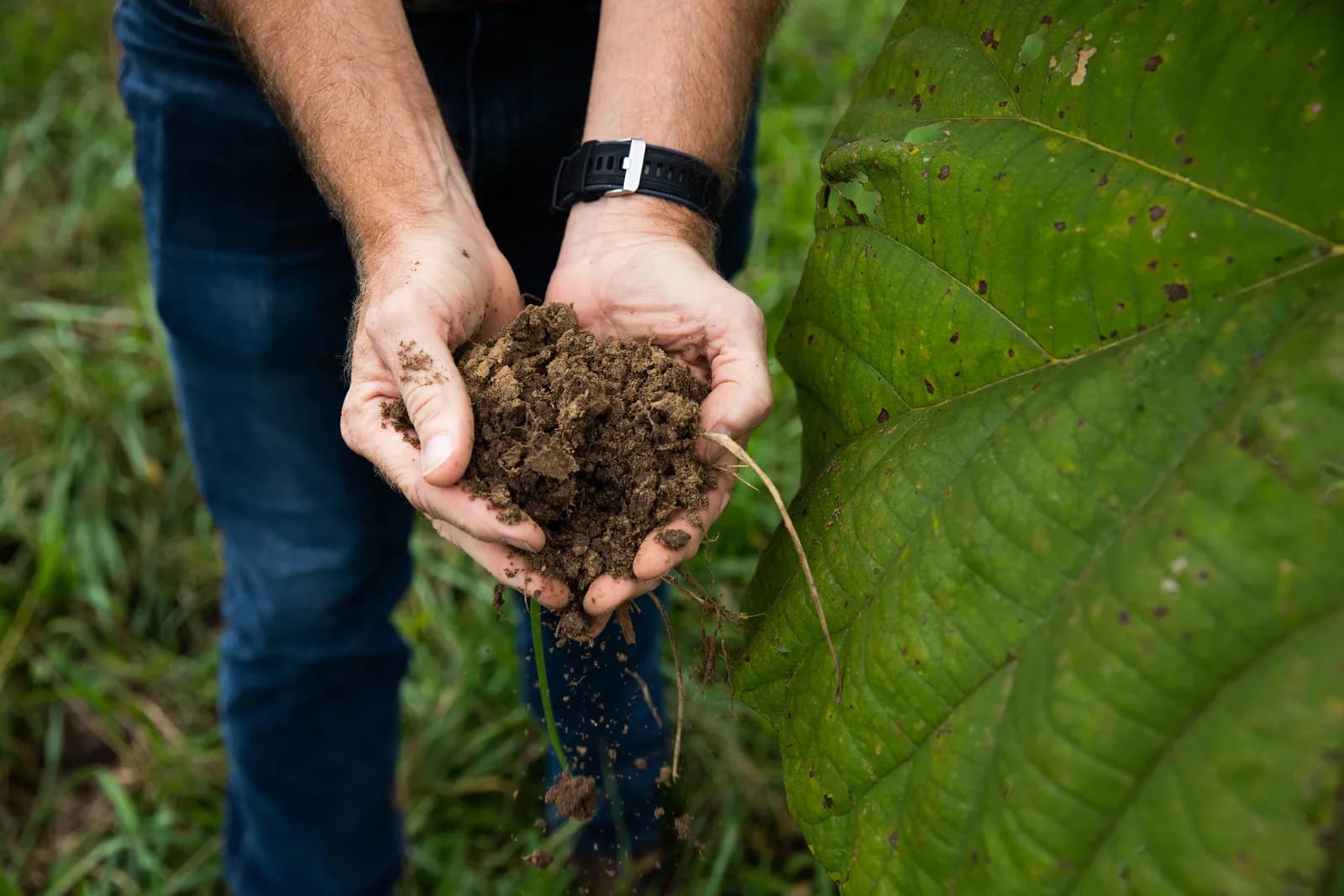
Nitrogen-rich leaves fall and feed the soil like a natural fertilizer, worth up to $77 per acre a year over a tree's first decade.
How we restore land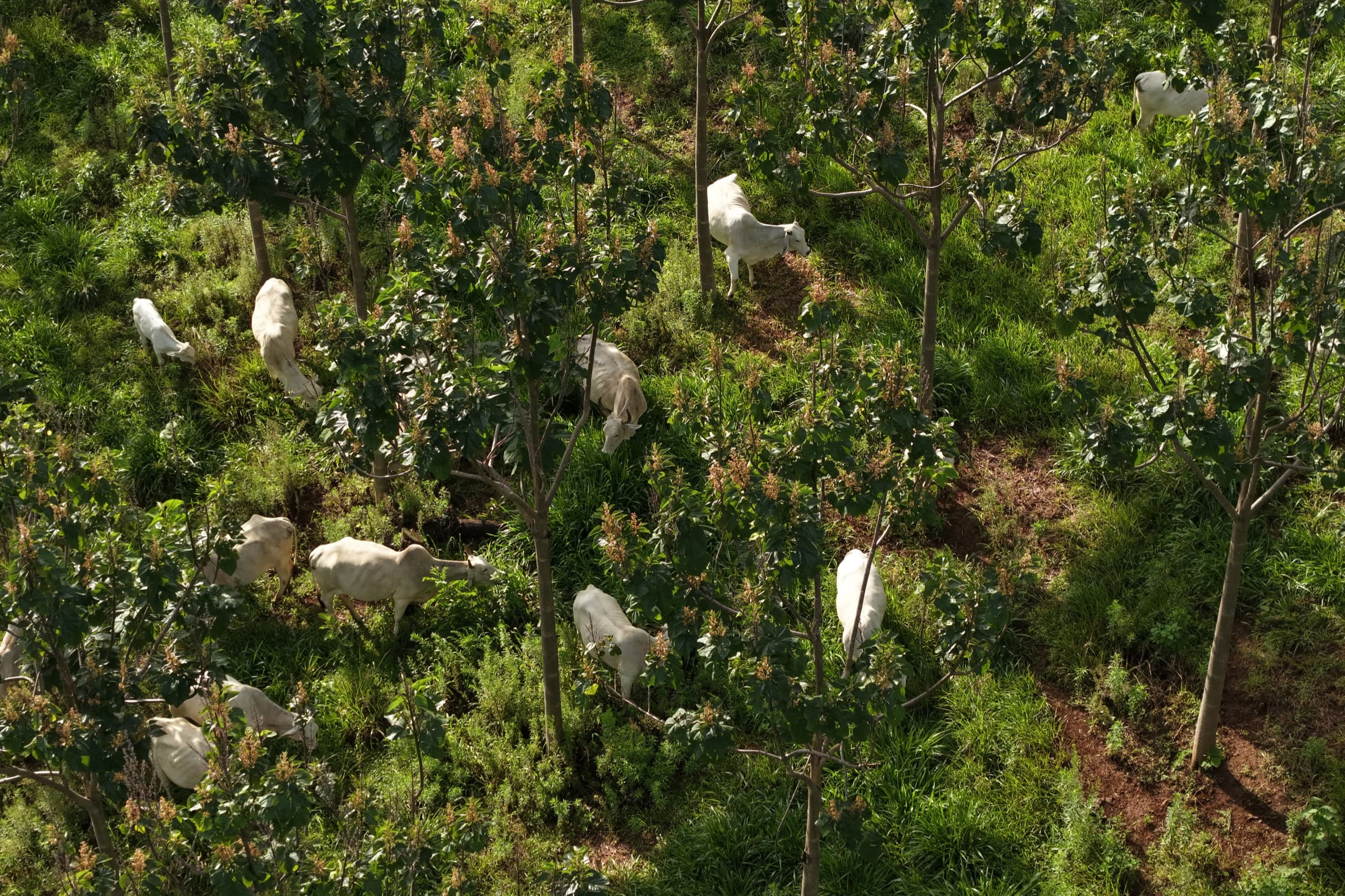
Food crops and grazing cattle share the land while the trees mature, so it keeps producing the whole time.
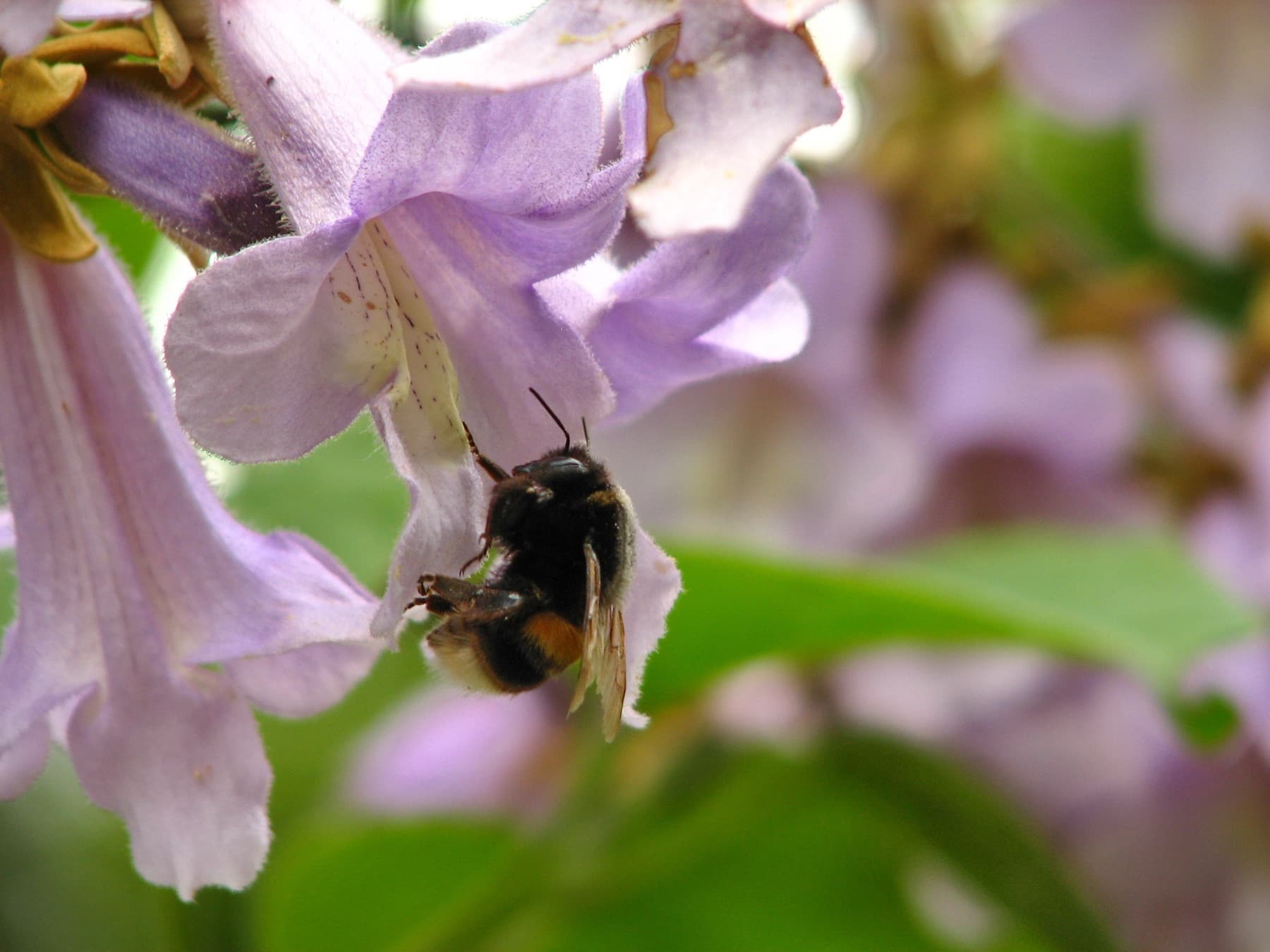
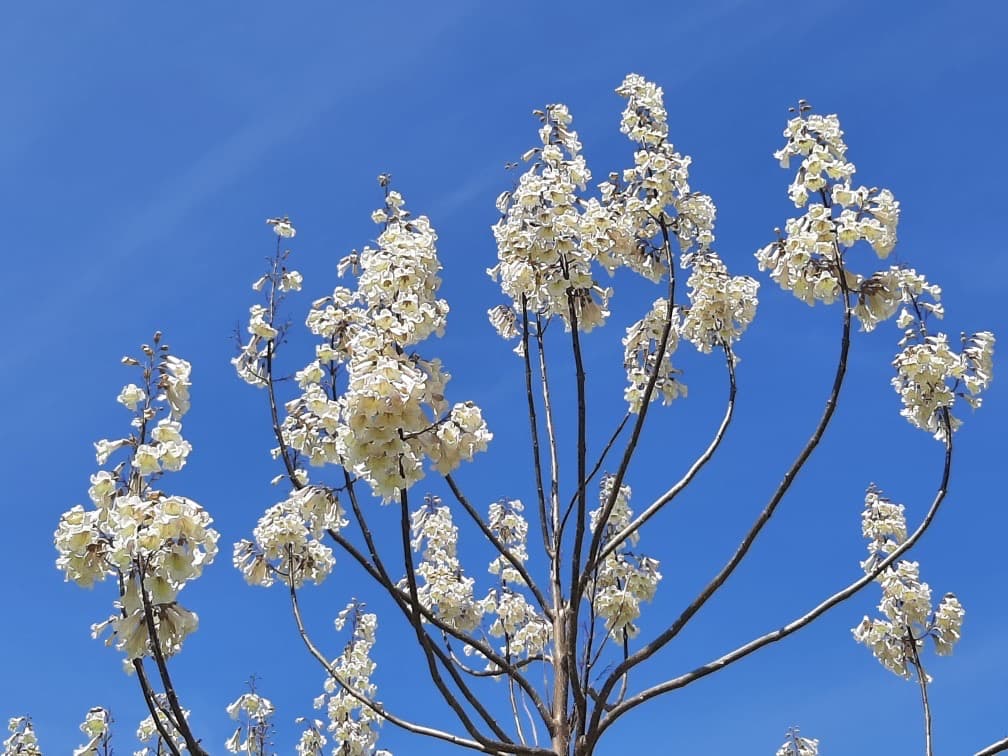
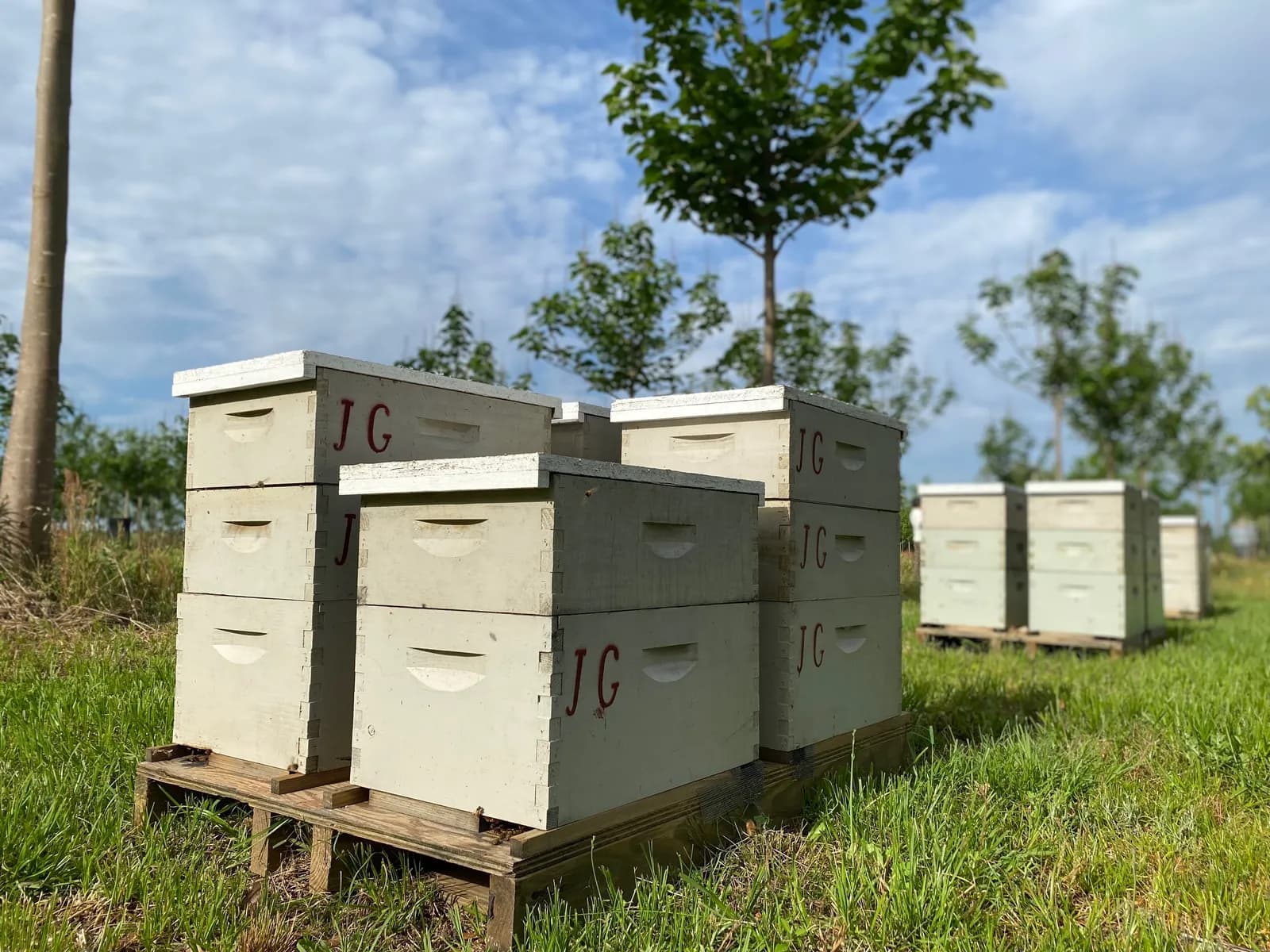
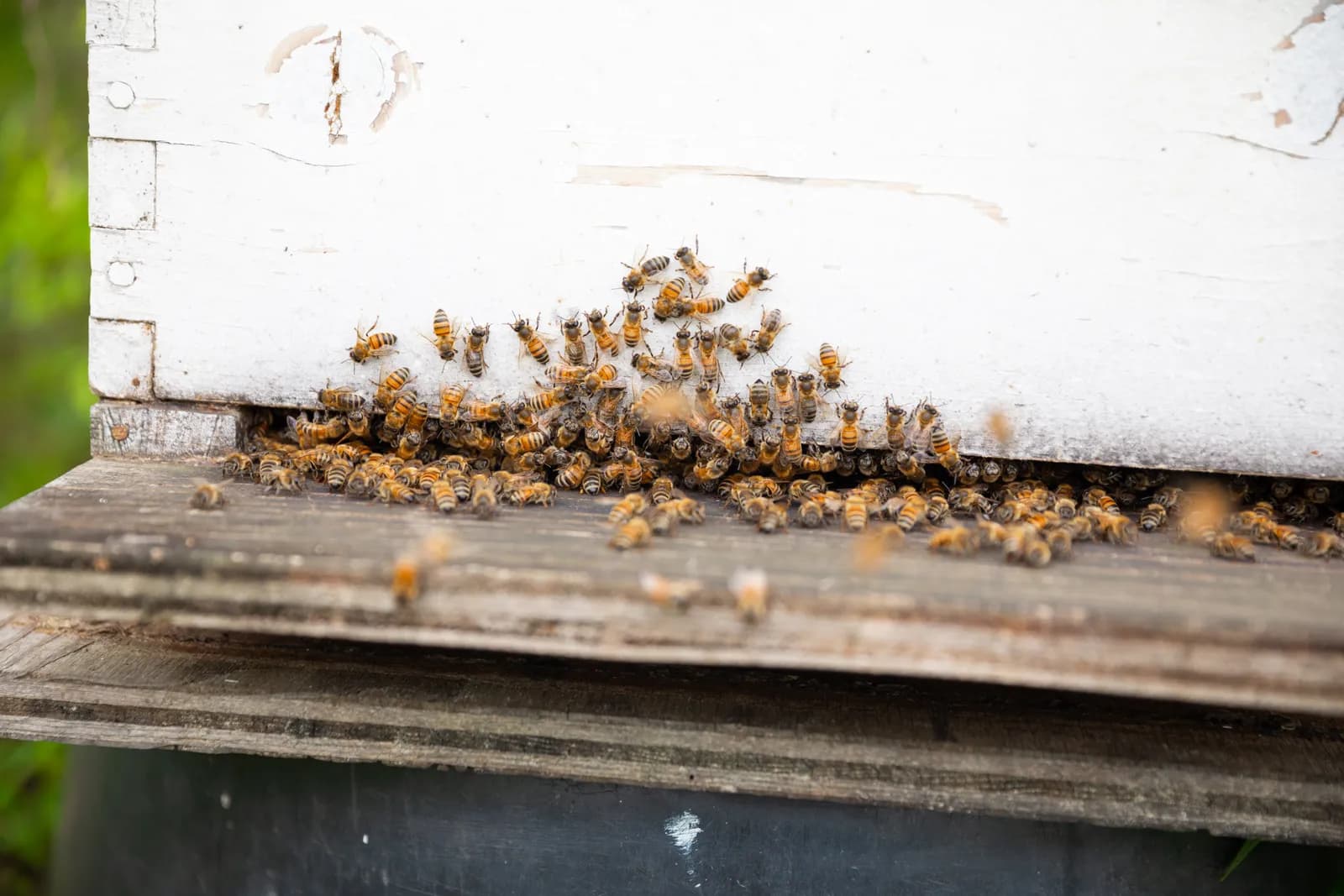
Grow with usBefore its leaves unfurl, paulownia breaks into tall spires of pale violet, foxglove-shaped blossoms, one of the first big nectar sources of the year. Pollinators swarm to it, so our farmers keep bee boxes right in the rows. The honey becomes a side income, and the bloom marks the start of each growing season.
We already have the world's most efficient carbon capture technology.
Read the article
We grow Paulownia fortunei and elongata, selected and field-tested across two dozen varieties in our own nurseries and labs. The question people raise most often is whether a fast-growing tree can escape into the wild. These varieties are considered non-invasive: their seeds rarely germinate outside cultivation, and every stand we plant is on land we manage, not left to spread on its own.